
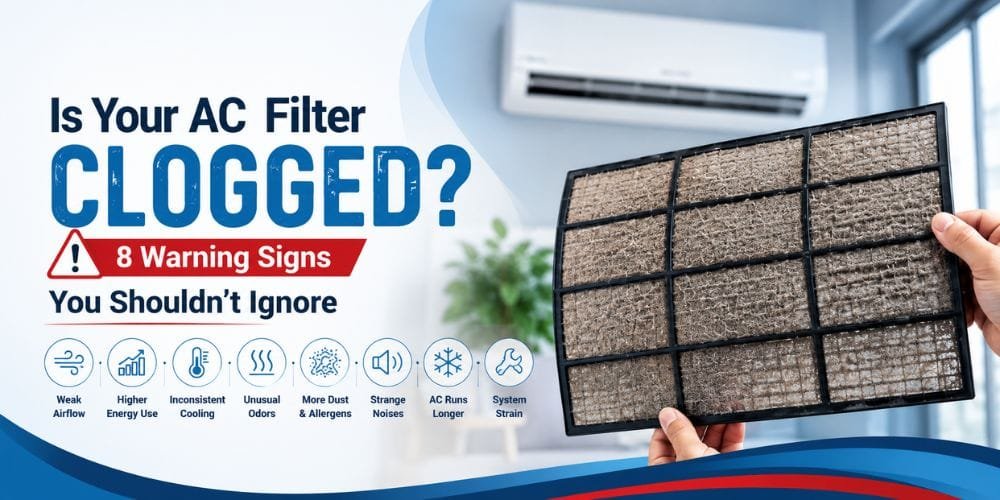
Austin summers don’t leave much room for a struggling air conditioner. If your system feels like it’s working overtime and your home or commercial building still isn’t comfortable, the culprit is often something small and easy to overlook: a clogged AC filter.
Your air filter is the first line of defense in your HVAC system. It helps capture airborne particles before they circulate through your home and HVAC equipment. But as the filter loads with dust and debris, airflow can become restricted. That restriction can affect comfort, system performance, energy use, and indoor air quality.
The U.S. Environmental Protection Agency (EPA) notes that filtration can be an effective supplement to source control and ventilation, and that upgrading the air filter in a home’s HVAC system can help improve indoor air quality.
Below are eight dirty air filter symptoms to watch for, why they happen, and how often you should check and replace your filter.
Signs of a Clogged AC Filter at a Glance
| Sign | What You’ll Notice |
|---|---|
| Weak airflow | Vents blow softly; some rooms feel stuffy |
| AC not cooling properly | System runs constantly but home stays warm |
| Rising energy bills | Unexplained increase in electricity use |
| More household dust | Furniture and shelves need dusting more often |
| Indoor air quality concerns | More airborne dust and particles |
| Frozen evaporator coil | Ice on refrigerant lines or water after thawing |
| Musty odors | Stale smell when the AC kicks on |
| Visibly dirty filter | Filter looks gray, matted, or heavily coated |
1. Dirty Air Filter Symptoms: Weak or Uneven Airflow
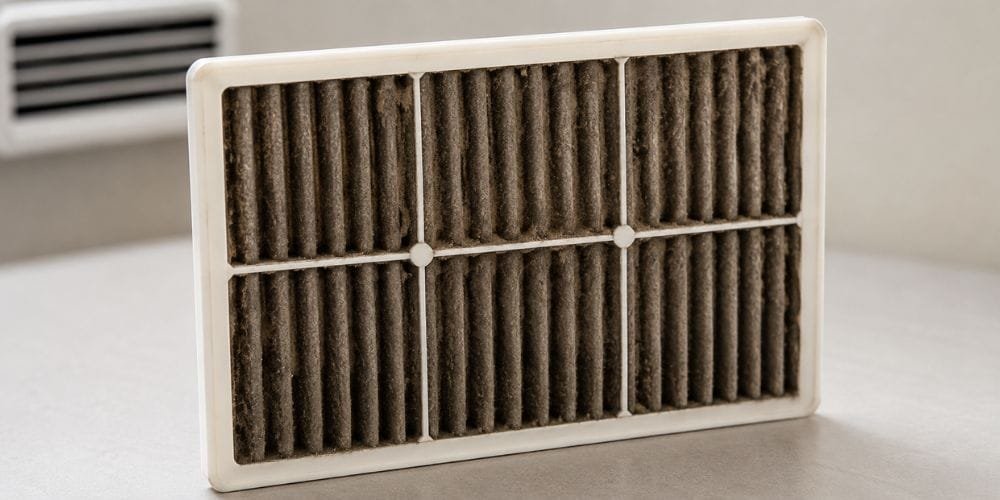
Restricted airflow is often one of the first clues that something is wrong. A clean filter allows air to pass through the return-air system more easily. As the filter becomes loaded with dust and debris, airflow can become increasingly restricted.
Watch for:
- Vents that used to blow strongly now feel weak
- Some rooms noticeably stuffier than others
- Rooms farther from the air handler barely cooling
- Longer cooling cycles than you’re used to
If your HVAC system suddenly seems to have less air coming from the registers, checking the filter is a simple first step.
2. AC Not Cooling Properly Despite Constant Running
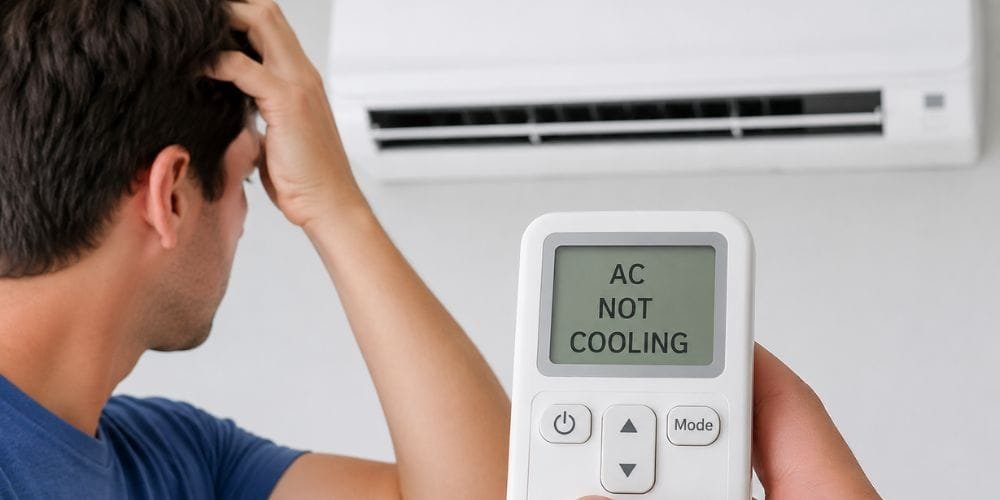
A clogged filter can contribute to an AC not cooling properly because restricted airflow can interfere with the system’s ability to move conditioned air through the home.
You may notice:
- The AC runs for unusually long periods
- Your home struggles to reach the thermostat setting
- Certain rooms remain warmer than others
- Airflow from the vents feels weaker than normal
If your AC is running but not cooling the way it should, check the filter before assuming you have a major equipment problem.
However, a clean filter doesn’t guarantee that the AC will cool properly. Refrigerant problems, dirty coils, ductwork issues, blower problems, and other HVAC faults can cause similar symptoms.
3. Climbing AC Energy Bills
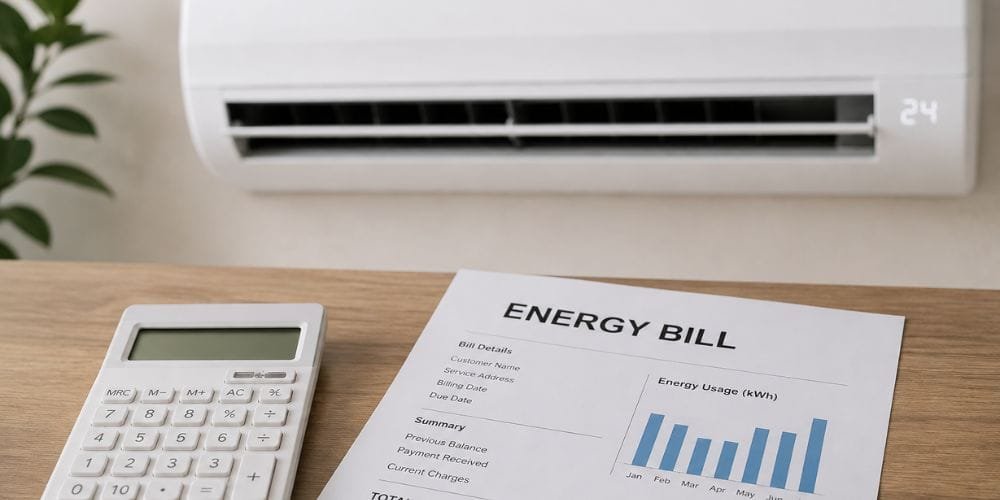
Restricted airflow can make your HVAC system work harder to maintain your desired indoor temperature. If the system is running longer than normal, your energy consumption can increase.
Possible warning signs include:
- A sudden increase in your electric bill
- Longer cooling cycles without a thermostat change
- The increase coinciding with a filter that hasn’t been replaced recently
- Your system running much more frequently than usual
A dirty filter isn’t the only possible cause of higher AC energy bills, but it’s one of the easiest things to check.
4. More Dust Settling Around the House
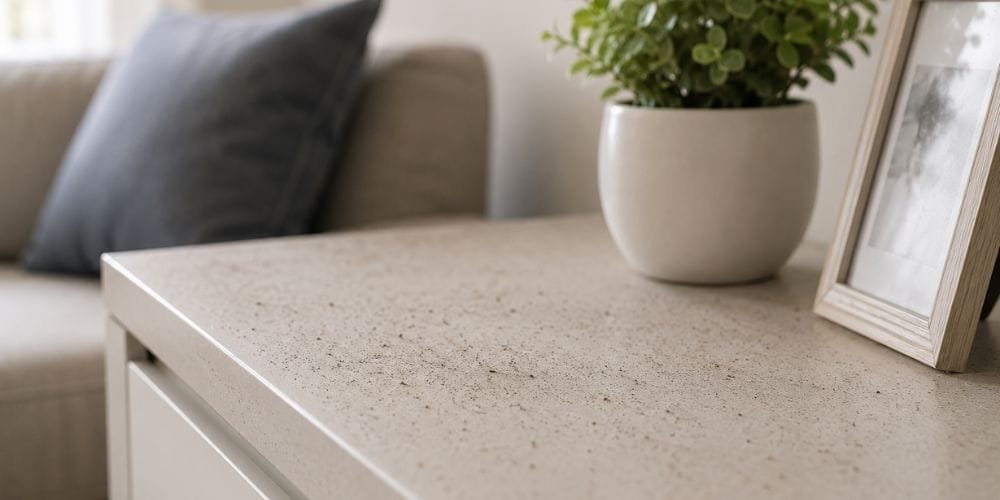
Your HVAC filter is designed to capture airborne particles as air passes through the system. According to the EPA, central HVAC filters can reduce indoor air pollution, although they cannot remove all pollutants from indoor air.
When a filter becomes heavily loaded, it’s a good time to inspect and replace it according to your equipment manufacturer’s recommendations.
Check for unusual dust buildup on:
- Furniture and shelves
- Vent covers and registers
- Ceiling fan blades
- Window sills
If you’re dusting more frequently than usual, checking your AC filter is a sensible first step.
5. Indoor Air Quality Problems and Allergy Flare-Ups

Your HVAC filter plays a role in indoor air quality by capturing some airborne particles as air moves through the system.
The EPA explains that filtration can supplement source control and ventilation and that upgrading the filter in a home’s HVAC system can help improve indoor air quality.
That doesn’t mean a filter eliminates every indoor pollutant or guarantees relief from allergies. But maintaining the filter is still an important part of basic HVAC maintenance.
You may notice:
- More visible airborne dust
- Increased dust accumulation around the home
- More particles collecting around vents
- Household members noticing more irritation from airborne dust or other indoor pollutants
Homes with pets, as well as commercial buildings with high occupancy or unusually high dust loads, may require more frequent filter checks.
6. A Frozen Evaporator Coil
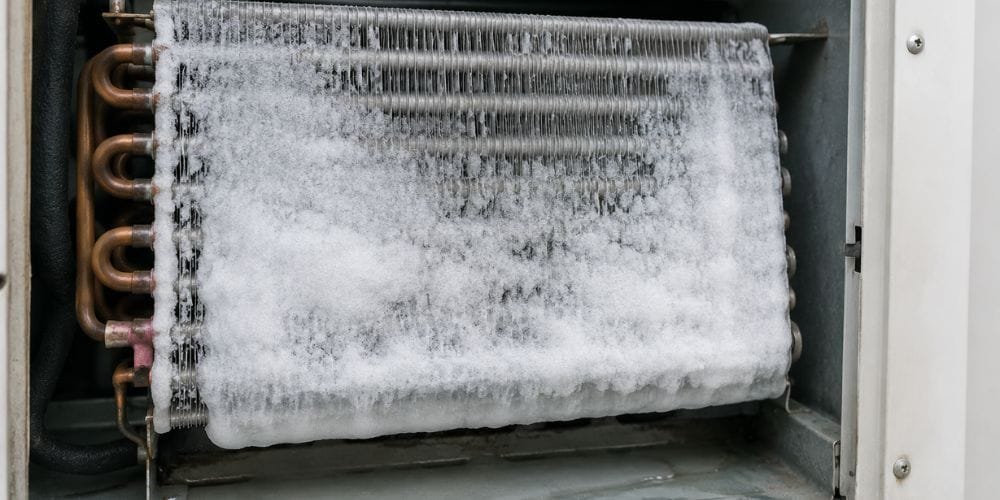
One of the more serious clogged AC filter symptoms is a frozen evaporator coil.
When airflow through the system is significantly restricted, the evaporator coil may become too cold and ice can form. If that happens, you may see:
- Ice on refrigerant lines
- A noticeable drop in cooling performance
- Water around the indoor unit after the ice melts
- The system running continuously without keeping up
A frozen coil shouldn’t be ignored. Turn the system off and allow the ice to thaw, then have the system checked if the problem returns. A dirty filter may be responsible, but other issues can also cause a frozen coil.
7. Musty Odors or Unusual Smells From the Vents
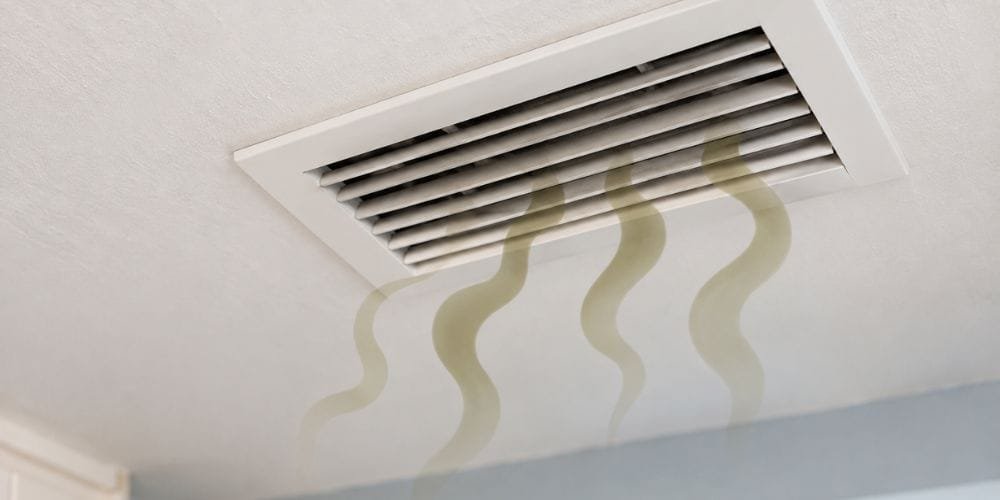
A musty or stale smell when the AC starts isn’t something you should automatically blame on the filter.
A dirty filter can accumulate dust and other particles, but persistent odors may also come from moisture, a dirty evaporator coil, drain problems, ductwork, or microbial growth.
Start by checking the filter and replacing it if it’s visibly dirty. If the odor continues, have the HVAC system inspected rather than assuming the filter is the source.
8. The Filter Itself Looks Gray, Matted, or Coated in Dust
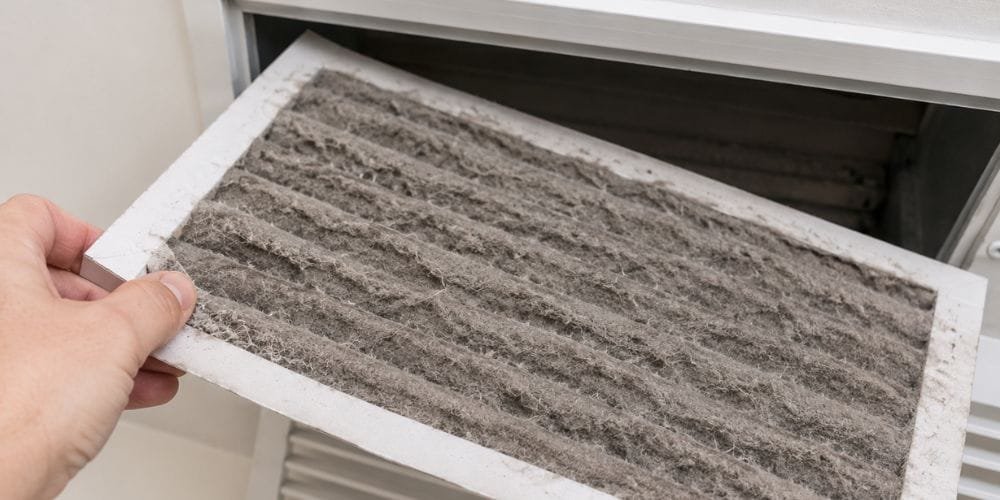
Sometimes the simplest test is the most useful one: look at the filter.
It’s time to investigate replacement if:
- The filter is heavily coated with dust
- The material appears matted or clogged
- Airflow has noticeably decreased
- The filter has reached the replacement interval recommended by its manufacturer
The EPA recommends following the manufacturer’s recommendations for HVAC filter maintenance and replacement.
Rather than relying only on a fixed calendar date, inspect the filter regularly and replace it when required by its condition and your system’s recommendations.
What Does the MERV Rating Mean?
You’ll often see a MERV rating printed on HVAC filters. MERV stands for Minimum Efficiency Reporting Values and indicates a filter’s ability to capture particles within specific size ranges.
According, to the, EPA higher MERV ratings generally indicate better capture of specific particle sizes.
The EPA also recommends that homeowners and building operators choosing a higher-efficiency filter select one that their HVAC system can accommodate. In its guidance, the EPA says homeowners considering an upgrade should choose at least MERV 13 or as high a rating as the system fan and filter slot can accommodate, potentially with help from an HVAC professional.
That last point matters: don’t automatically install the highest-MERV filter you can find. The correct filter depends on your HVAC system’s design and airflow requirements.
Quick DIY Check for a Clogged AC Filter
- Turn off the system before removing the filter.
- Locate and remove the filter from the return vent or air handler.
- Inspect the filter for heavy dust, pet hair, and discoloration.
- Check the manufacturer’s replacement guidance rather than relying solely on appearance.
- Install the correct replacement filter with the airflow arrow pointing in the proper direction.
If you’re unsure which filter size or rating your system requires, check the existing filter, equipment documentation, or contact an HVAC professional.
When It’s More Than Just the Filter
A fresh filter can address a basic airflow restriction, but it won’t fix every HVAC problem.
If any of these symptoms continue after replacing the filter, the issue may be elsewhere:
- AC still runs constantly
- Cooling remains uneven from room to room
- Strange rattling, buzzing, or whistling continues
- Ice reappears on the coil or refrigerant lines
- Energy bills remain unusually high
- Airflow remains weak despite a clean filter
These symptoms can be associated with problems such as refrigerant issues, blower problems, dirty coils, ductwork restrictions, or other equipment faults.
That’s when it’s better to have a professional diagnose the system rather than repeatedly replacing filters and hoping the problem disappears.
Don’t Ignore the Signs of a Clogged AC Filter
A clogged AC filter may seem like a small maintenance issue, but it can affect airflow, cooling performance, energy use, and indoor air quality. Regularly checking and replacing your filter can help your AC run efficiently and maintain a comfortable indoor environment.
Make a habit of checking the filter regularly, especially during periods of heavy AC use, and replace it when it’s visibly dirty or according to the manufacturer’s recommendations. If you’ve replaced the filter but your AC is still struggling to cool, airflow remains weak, or the system continues to freeze or run constantly, the filter may not be the underlying problem.
For homes and commercial buildings in Austin, Capitol Cooling can help identify whether the issue is simply a clogged filter or a larger AC problem that needs attention.
FAQ:
Can a clogged AC filter stop my AC from cooling?
Yes. A severely clogged filter restricts airflow enough to reduce cooling performance and can even cause the evaporator coil to freeze.
How do I know if my air filter needs replacing?
Weak airflow, higher energy bills, more household dust, a musty smell, and a visibly dirty filter are all signs it’s time for a change.
Can a dirty filter really raise my energy bill?
Yes. Restricted airflow forces your system to run longer to reach the same temperature, increasing energy use.
What happens if I never replace my AC filter?
Airflow gets progressively worse, indoor air quality declines, and components like the blower motor and evaporator coil face added strain, often leading to costly repairs.
Is it worth having a professional check my AC filter and system?
If replacing the filter doesn’t resolve airflow or cooling issues, a professional inspection can catch problems, llike refrigerant loss or a failing blower motor, before they turn into a full system breakdown.