
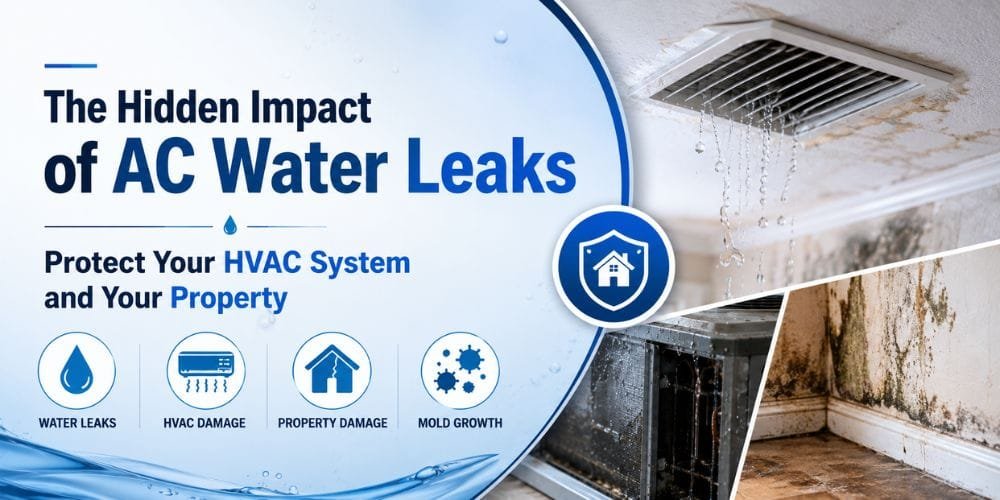
An AC leaking water may seem like a small issue at first, but hidden HVAC leaks can quickly damage ceilings, drywall, insulation, flooring, and even electrical systems. In humid areas across Connecticut, Greenwich, Stamford, and Westchester County, air conditioning systems work harder during summer, increasing the risk of condensation overflow and drainage problems.
In many homes and commercial buildings, clogged drain lines, frozen evaporator coils, or overflowing drain pans silently cause costly water damage before property owners even notice the issue.
If you are wondering why your AC is leaking water, understanding the most common causes can help you prevent expensive repairs and long-term structural damage.
Common Causes of AC Water Leaks
Clogged Condensate Drain Line
A clogged condensate drain line is the most common reason for AC leaking water inside the house. Over time, algae, dirt, mold, and debris build up inside the drain line, preventing water from draining properly. In many attic HVAC systems throughout Connecticut homes, these leaks often remain hidden until ceiling stains or bubbling paint appear.
Dirty Air Filter
A dirty air filter restricts airflow across the evaporator coil. When airflow becomes limited, the coil may freeze. Once the ice melts, excess water can overflow the drain pan and create AC water damage inside walls, ceilings, or insulation.
According to ENERGY STAR, regular HVAC maintenance and air filter replacement help improve system efficiency and reduce airflow-related issues.
Frozen Evaporator Coil
Frozen evaporator coils are commonly caused by restricted airflow or low refrigerant levels.
During humid Northeast summers, HVAC systems in Greenwich, Stamford, and nearby coastal Connecticut areas produce large amounts of condensation. When frozen coils melt, the drainage system can quickly overflow and cause hidden moisture damage.
Cracked Drain Pan or Damaged Drain Line
Older HVAC systems may develop rusted or cracked drain pans over time. Damaged drain line fittings can also redirect water into ceilings, attics, mechanical rooms, or insulation.
Even small leaks can eventually lead to mold growth, drywall deterioration, and structural damage.
Why Is My AC Leaking Water Inside My House?
If your AC is leaking water inside your house, the issue is usually related to drainage failure.
Common causes include:
- clogged condensate drain lines,
- overflowing drain pans,
- frozen evaporator coils,
- disconnected drain fittings,
- or improper HVAC installation.
In many Connecticut homes with attic HVAC systems, water may spread through insulation and ceilings before visible damage appears inside living spaces.
AC Leaking Water in Attic Spaces
An AC leaking water in attic areas can become serious very quickly because leaks often remain hidden for long periods.
Our HVAC technicians commonly find:
- wet insulation,
- ceiling stains,
- wood rot,
- mold growth,
- and damaged drywall caused by attic condensate leaks.
In commercial office buildings across Stamford and Westchester County, hidden HVAC leaks above suspended ceilings frequently go unnoticed until visible water damage appears inside occupied spaces.
Property Damage Caused by AC Water Leaks
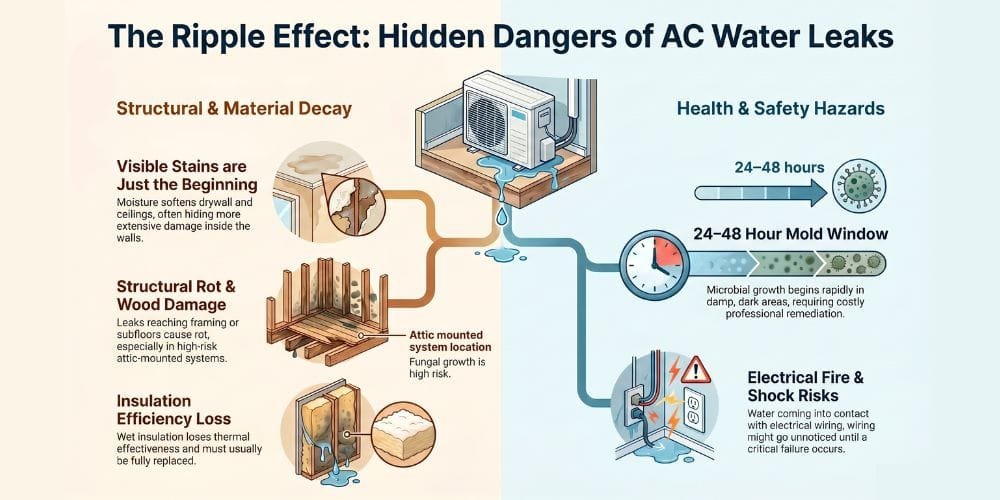
Long-term HVAC leaks can weaken drywall, stain ceilings, damage insulation, and create mold growth inside attics or wall cavities.
Water reaching framing or subflooring may eventually cause wood rot and structural deterioration. Leaks near electrical systems may also increase the risk of electrical shorts or fire hazards.
According to the EPA, mold can begin growing within 24–48 hours in damp indoor environments, making HVAC water leaks a serious indoor air quality concern.
Commercial HVAC leaks may also damage:
- office spaces,
- server rooms,
- retail inventory,
- and customer-facing areas.
Is Water Leaking From an AC Dangerous?
Yes. Water leaking from AC systems can become dangerous if ignored.
Potential risks include:
- mold growth,
- indoor air quality problems,
- ceiling collapse,
- electrical damage,
- and structural deterioration.
The FEMA recommends addressing indoor water intrusion quickly to help reduce structural damage and long-term moisture problems.
Because moisture spreads quickly inside walls and ceilings, even a small HVAC leak can eventually become an expensive restoration project.
What Should You Do If Your AC Is Leaking Water?
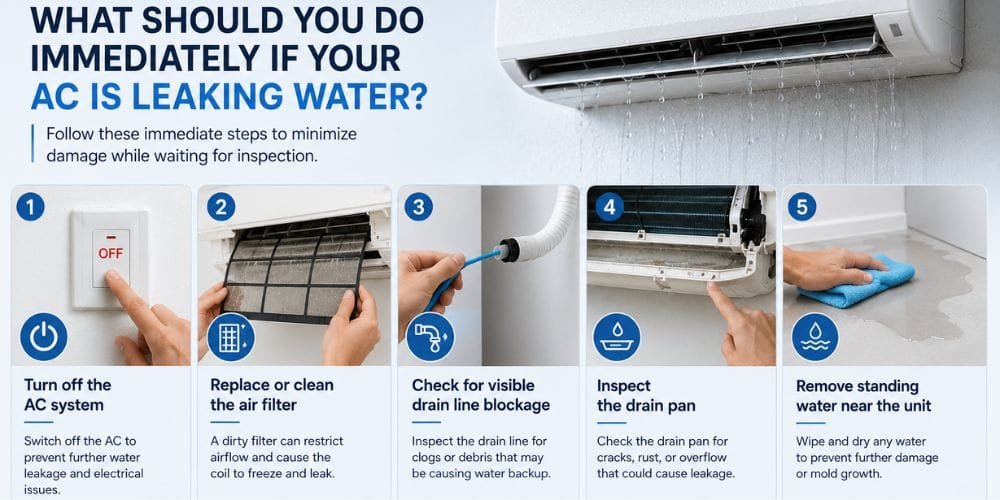
If your air conditioner is leaking water, follow these steps immediately:
- Turn off the HVAC system.
- Replace or clean the air filter.
- Check the condensate drain line for visible clogs.
- Inspect the drain pan for cracks or standing water.
- Contact a licensed HVAC technician for inspection.
Quick action can help reduce water damage and prevent larger HVAC repairs.
How to Prevent Future AC Water Leaks
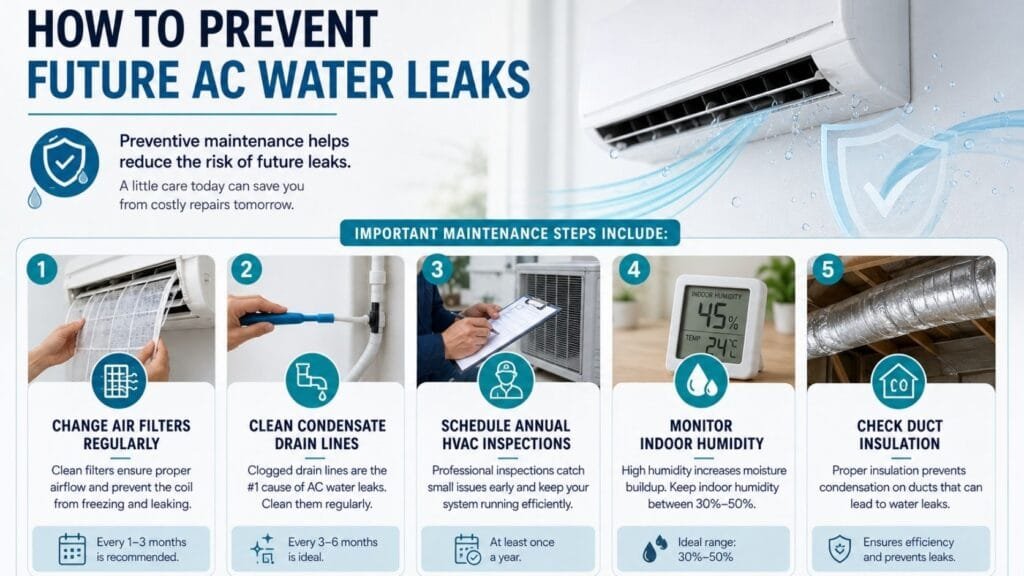
Preventive HVAC maintenance significantly reduces the risk of the air conditioner leaking water.
Important maintenance steps include:
- changing air filters regularly,
- cleaning condensate drain lines,
- scheduling annual HVAC inspections,
- monitoring indoor humidity,
- and checking duct insulation.
In humid Connecticut and coastal Northeast climates, regular HVAC maintenance is especially important during peak summer cooling months.
Industry organizations like ASHRAE also emphasize proper HVAC moisture management to improve indoor air quality and reduce condensation-related problems.
When to Contact an HVAC Professional
If there are signs of an active water leak, drain pan overflow, ice formation on the evaporator coil, expanding water stains, or any moisture near electrical components, professional service should be arranged promptly. A qualified HVAC technician can identify the source of the problem, clear or replace the condensate drain line, inspect and address the drain pan condition, assess refrigerant levels, and verify that the system is draining correctly.
Where water intrusion has already affected building materials, an assessment by a water damage restoration professional is also advisable. At Capitol Cooling, we can coordinate expert evaluations and ensure early identification of affected areas, particularly where mold risk is elevated, helping to limit the scope of remediation required.
Frequently Asked Questions
Why is my AC leaking water but still cooling?
Cooling and drainage are separate functions. Your AC may continue cooling while drainage problems worsen internally.
Can a dirty air filter cause AC water leaks?
Yes. Restricted airflow can freeze the evaporator coil and create excess water overflow.
Can AC water leaks cause mold?
Yes. Moisture buildup inside walls, ceilings, or ductwork creates ideal conditions for mold growth.
Why is my attic AC leaking water?
Attic AC leaks are commonly caused by clogged drain lines, frozen evaporator coils, or overflowing drain pans.