
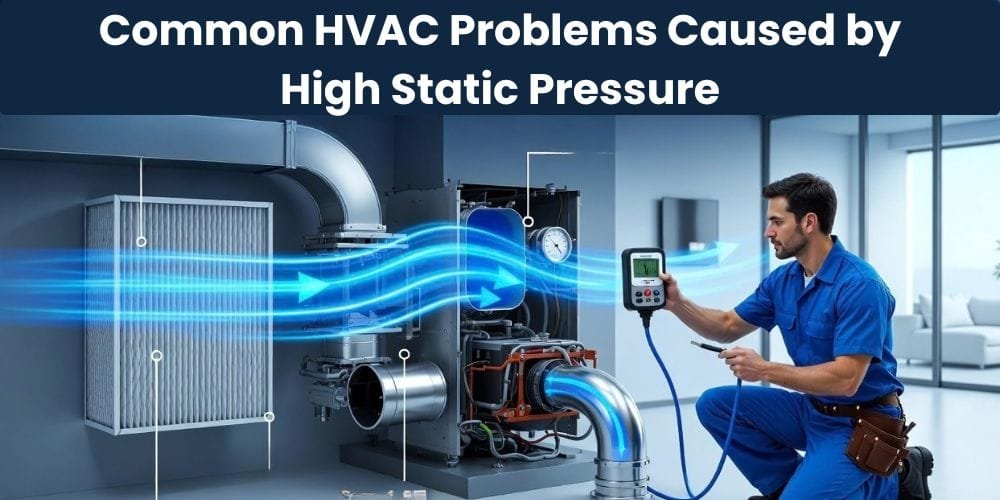
Modern heating and cooling systems depend on balanced airflow to operate correctly. When airflow becomes restricted inside the duct system, pressure builds up and begins to affect different parts of the system. This condition is known as high static pressure.
Many homeowners notice signs such as weak airflow, rooms that never reach the set temperature, or a system that runs longer than expected. These issues often trace back to pressure problems inside the ductwork.
Understanding how static pressure affects HVAC performance helps identify problems early and prevent unnecessary repairs. According to the U.S. Department of Energy, airflow problems in duct systems can reduce HVAC efficiency by as much as 20–30% when left unresolved.
What Is Static Pressure in HVAC?
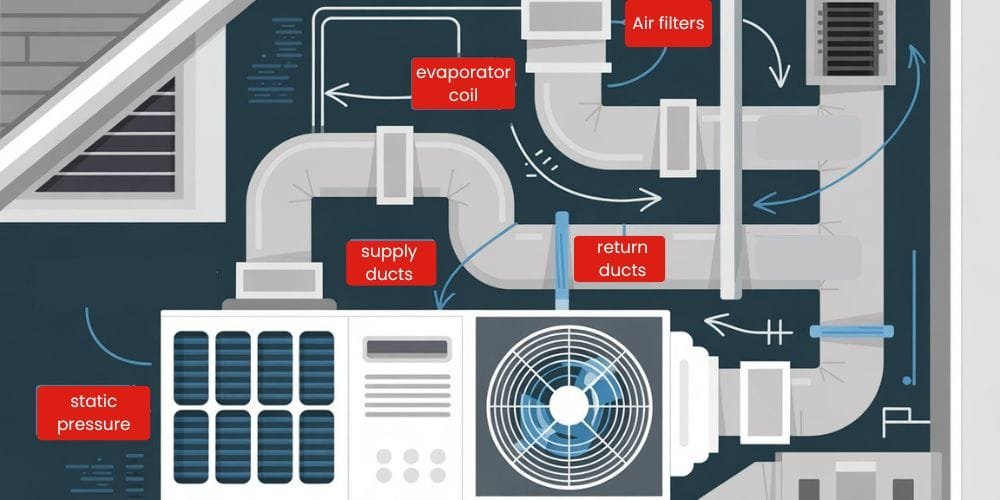
Static pressure in HVAC refers to the resistance air faces while moving through the duct system and HVAC components.
Air travels through several parts of the system, including:
- Air filters
- Evaporator coils
- Supply ducts
- Return ducts
- Vents and registers
Each component creates some resistance to airflow, which is known as duct static pressure. When airflow resistance increases, pressure builds inside the system and begins to affect airflow performance.
For homeowners who want a broader understanding of how air conditioning systems move air through ductwork and cooling components, this guide explains the full process in detail: Central Air Conditioning 2026 Guide
Most residential HVAC systems are designed to operate at around 0.5 inches of water column (in. w.c.) of total static pressure.
3 Common Problems Caused by High Static Pressure HVAC
1. Weak Airflow From Vents
One of the first signs of high static pressure in HVAC systems is weak airflow from supply vents. Even when the system is running, the amount of air reaching different rooms may feel limited.
When static pressure in a duct system becomes too high, the blower motor struggles to push air through the ductwork. As a result, less conditioned air reaches the living spaces.
Common signs include:
- Weak airflow from vents
- Uneven temperatures between rooms
- HVAC system running longer than normal
- Some rooms feeling comfortable while others remain warm
A clogged air filter is one of the most common causes of airflow restriction. When filters become dirty, they block airflow and increase the static pressure of air inside the system.
2. Frozen Evaporator Coils
Another common problem caused by high static pressure HVAC systems is frozen evaporator coils.
The evaporator coil absorbs heat from indoor air during the cooling process. For this process to work efficiently, a steady flow of warm air must move across the coil.
When airflow becomes restricted due to excessive duct static pressure, the temperature of the coil can drop too low. Instead of draining away, moisture in the air may freeze on the coil surface.
Common airflow restrictions that cause this problem include:
- Dirty or clogged air filters
- Blocked return vents
- Closed supply vents in multiple rooms
- Dust buildup on the evaporator coil
Once ice forms on the coil, cooling performance drops significantly and the system may struggle to maintain indoor comfort.
3. Blower Motor Strain and Higher Energy Use
The blower motor is responsible for moving air throughout the heating and cooling system. When high static pressure in HVAC systems develops, the motor must work harder to push air through the duct system.
Over time, this additional strain can lead to several problems:
- Increased electricity consumption
- Longer heating and cooling cycles
- Overheating of the blower motor
- Faster wear of HVAC components
Poorly designed duct systems can also increase static pressure in a duct network. When ductwork is undersized or contains too many bends, airflow resistance increases and creates continuous pressure inside the system.
If this condition continues for long periods, the blower motor may wear out earlier than expected.
High vs Low Static Pressure HVAC
Both high and low static pressure HVAC conditions can affect system performance.
| HVAC Condition | Description | Common Causes |
| High Static Pressure HVAC | Occurs when airflow faces excessive resistance inside the HVAC system, making it harder for air to move through the ductwork and components. | Dirty air filters, blocked vents, dust buildup on coils, undersized or poorly designed ductwork |
| Low Static Pressure HVAC | Occurs when airflow moves too freely through the system due to leaks or improper system configuration. | Leaky ductwork, loose system connections, improper blower settings |
Maintaining balanced airflow helps ensure efficient heating and cooling performance.
How to Check Static Pressure HVAC
Understanding how to check static pressure HVAC systems requires specialized tools and proper measurement techniques.
Technicians typically follow these steps:
- Drill small test ports in the duct system.
- Insert pressure probes into supply and return ducts.
- Connect the probes to a digital manometer.
- Measure the pressure difference across system components.
This process helps determine whether airflow resistance is within the recommended range.
If you want a more detailed explanation of how technicians measure external static pressure and interpret those readings, this guide explains the process step-by-step: External Static Pressure Meaning in HVAC: What It Is, How It Works, and Why It Matters
FAQ
What is static pressure in HVAC?
Static pressure in HVAC refers to the resistance air encounters while moving through the ductwork and system components such as filters, coils, and vents.
What causes high static pressure HVAC?
High static pressure HVAC is usually caused by clogged air filters, blocked vents, dirty evaporator coils, or poorly designed duct systems.
What is normal duct static pressure?
Most residential HVAC systems operate at approximately 0.5 inches of water column (in. w.c.) of total static pressure.
How do technicians perform an HVAC static pressure test?
Technicians perform an HVAC static pressure test using a digital manometer to measure airflow pressure inside the supply and return ducts.
Why is checking static pressure HVAC systems important?
Checking static pressure HVAC systems helps identify airflow restrictions that reduce efficiency and place additional strain on HVAC components.
Conclusion
High static pressure can create several airflow problems in HVAC systems, including weak airflow, frozen evaporator coils, and additional strain on the blower motor. Understanding how static pressure affects airflow helps homeowners recognize early warning signs and address issues before they affect system efficiency.
Regular maintenance, clean air filters, and properly designed ductwork all help maintain balanced airflow and normal static pressure levels. When airflow problems continue, or a static pressure test is required, an experiencedHVAC technician, such as the team at Capitol Cooling, can help identify the issue and restore proper system performance.