
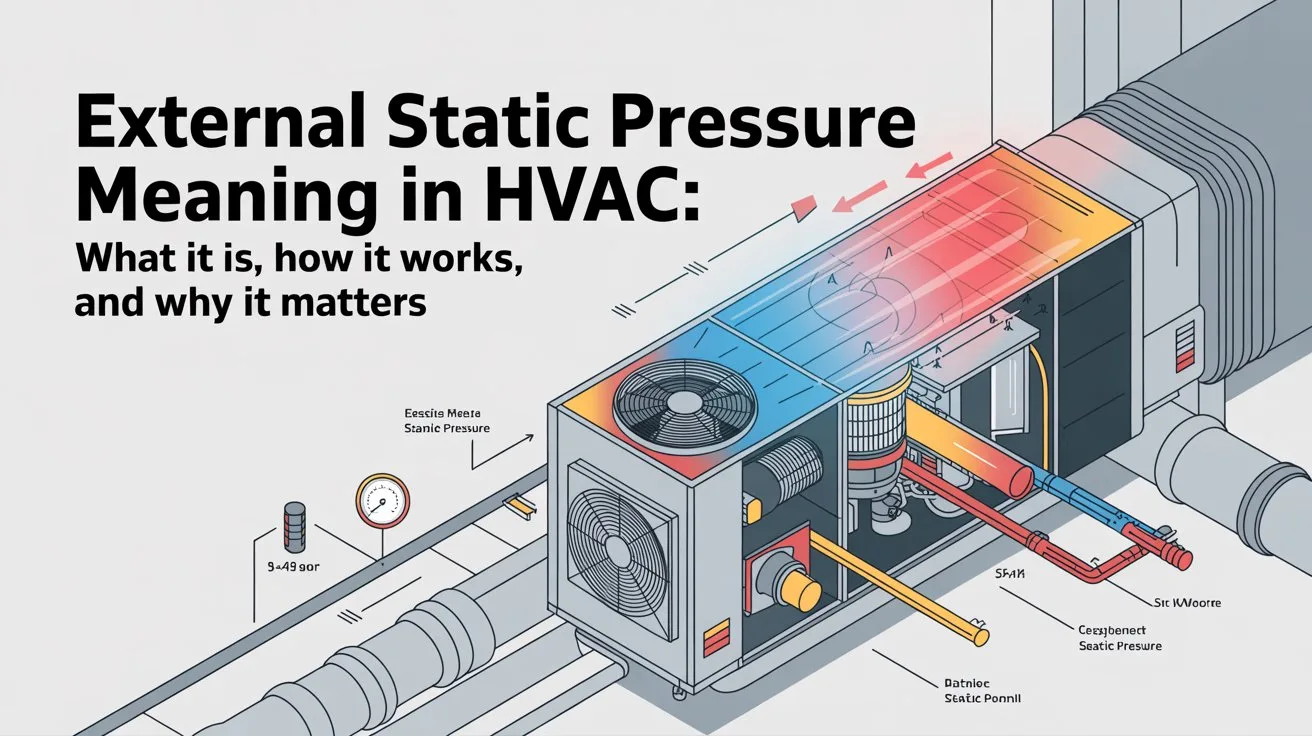
External Static Pressure (ESP) is the total resistance to airflow that an HVAC blower must overcome outside the air handler, created by filters, ducts, coils, grilles, and fittings. It’s measured in inches of water column (in. WC), and most residential systems are designed to run between 0.3 and 0.6 in. WC total. Static pressure, more broadly, is simply the outward push of air against the walls of any duct or enclosure, whether inside or outside the unit.
If your vents feel weak, your energy bills are climbing, or your system short-cycles, static pressure is one of the first things a technician checks, and it’s usually the real story behind problems that look like they’re coming from the furnace or AC itself.
What Is Static Pressure in HVAC?.
Static pressure is the force air exerts against the walls of a duct, filter, coil, or any other surface it passes through. It’s not the speed of the air; it’s the resistance the air is pushing against. Think of it the way pressure builds in a garden hose when you partially block the nozzle: the water isn’t moving faster inside the hose, but the pressure behind the blockage rises.
In an HVAC system, every component the air passes through- filter, coil, ductwork, and grille adds a small amount of resistance. Add it all up, and that’s the static pressure your blower motor has to fight to move air through the house. Static pressure is typically measured in:
| Unit | Common Use |
|---|---|
| Inches of water column (in. WC) | Standard unit for U.S. residential/commercial HVAC |
| Pascals (Pa) | Metric equivalent, common in engineering specs (1 in. WC ≈ 249 Pa) |
What Is External Static Pressure (ESP)?
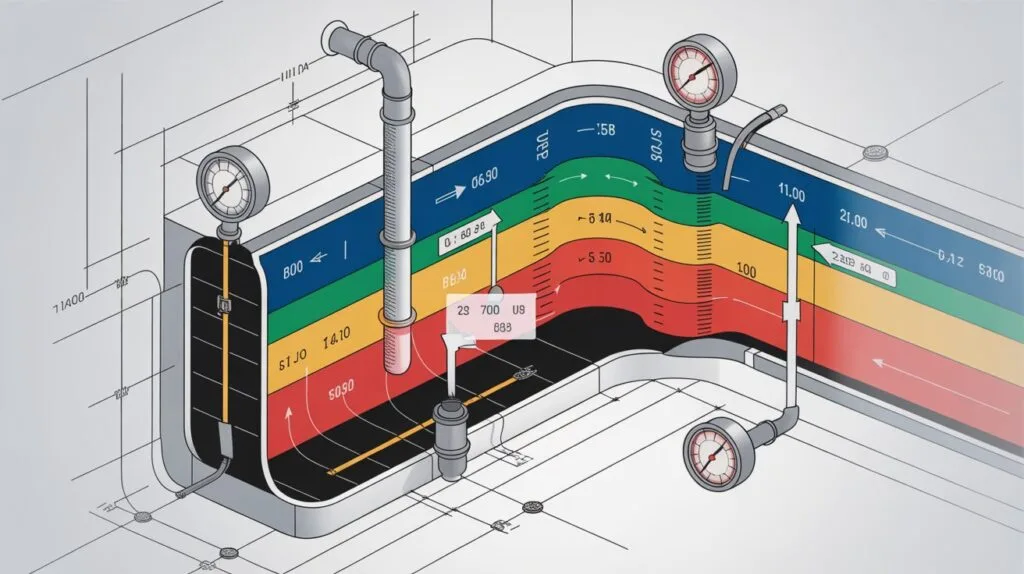
External static pressure specifically refers to the resistance measured outside the air handler cabinet — meaning everything downstream and upstream of the blower itself: supply ductwork, return ductwork, filters, registers, grilles, dampers, and add-ons like UV lights or humidifiers.
ESP does not include the resistance created by components inside the equipment cabinet, such as the evaporator coil or heat exchanger; that’s counted separately as internal static pressure.
ESP matters because every HVAC blower is rated by the manufacturer to move a specific volume of air (measured in CFM) against a specific maximum static pressure. If actual ESP in your ductwork exceeds that rating, the blower moves less air than the system was designed to deliver, even if the compressor or furnace itself is working perfectly.
External Static Pressure vs. Total Static Pressure vs. Internal Static Pressure
These three terms get mixed up constantly. Here’s the difference:
| Term | What It Measures | Where |
|---|---|---|
| Internal static pressure | Resistance from components inside the air handler cabinet (coil, heat exchanger) | Inside the unit |
| External static pressure (ESP) | Resistance from ductwork, filters, registers, and accessories | Outside the unit |
| Total static pressure (TESP) | Internal + external combined — the full load on the blower | Whole system |
Formula: TESP = Supply-side static pressure + Return-side static pressure
Manufacturers rate blowers against external static pressure specifically, because that’s the portion installers and duct designers control. Internal static pressure is fixed by the equipment’s own design.
Normal / Ideal External Static Pressure Range
| System Type | Typical Ideal ESP | Notes |
|---|---|---|
| Residential split system (standard filter) | 0.3 – 0.5 in. WC | Most common target range |
| Residential system with high-MERV filter | 0.5 – 0.6 in. WC | Denser filters add resistance |
| Light commercial air handler (AHU) | 0.5 – 1.0 in. WC | Varies significantly by unit size and ductwork |
| Maximum rated ESP (most residential blowers) | ~0.8 – 1.0 in. WC | Check the equipment nameplate; this is the hard ceiling |
Readings above roughly 0.8 in. WC on a residential system are generally considered high and worth investigating. Readings that climb well past a system’s rated maximum shorten blower motor life and reduce delivered airflow, even if the thermostat shows the system “running.”
How to Measure External Static Pressure
Technicians use a manometer (digital or analog) with static pressure probes to take readings on both sides of the air handler.
Steps:
- Insert a static pressure probe into the supply plenum (just past the blower/coil).
- Insert a second probe into the return plenum (just before the blower/coil).
- Record the supply-side reading and the return-side reading separately.
- Add the absolute values of both readings together.
- The sum is your total external static pressure (TESP).
This two-point method is the industry-standard way to verify a system is running within its design range, and it’s a step that should happen at every installation and at major service visits, not just when there’s already a complaint.
Signs of High Static Pressure
- Weak or reduced airflow from vents
- Whistling, rushing, or hissing sounds around registers or the filter
- Uneven temperatures between rooms
- Filters that need replacing more often than expected
- Rising energy bills without a clear cause
- Short cycling or unexpected system shutdowns
- Frozen evaporator coil (in cooling mode)
What Causes High External Static Pressure
- Dirty or clogged air filters — the single most common cause; a loaded filter can add significant resistance on its own.
- Undersized or poorly designed ductwork — narrow trunks, long duct runs, sharp bends, and crushed flex duct all add resistance.
- Closed or blocked vents — furniture, rugs, or fully closed registers restrict return airflow.
- Dirty evaporator coils — buildup on coil fins narrows the air path the same way a clogged filter does.
- Oversized accessories — humidifiers, UV lights, or high-efficiency filters that aren’t sized for the system’s airflow rating.
Can Static Pressure Be Too Low?
Yes, though it’s far less common than high static pressure. Low static pressure usually points to leaky, oversized, or disconnected ductwork rather than a blockage; air is escaping or dispersing before it reaches the intended rooms, so the system reads lower resistance than it should while still delivering uneven comfort.
How High Static Pressure Is Fixed
- Replacing clogged filters with correctly rated, properly sized ones
- Resizing or redesigning undersized duct runs
- Adding return ducts to reduce the load on existing returns
- Cleaning the blower assembly and evaporator coil
- Adjusting or replacing dampers and registers
Correcting static pressure protects comfort, lowers energy use, and extends the life of the blower motor and compressor.
External Static Pressure vs. Static Pressure: Why the Terminology Matters
“Static pressure” is the general term forresistance to airflow anywhere in a duct system. “External static pressure” narrows that down to the portion outside the equipment cabinet, the part a duct designer or installer can actually influence. Technicians reference ESP specifically because manufacturer airflow charts and blower performance tables are built around it.
Final Thoughts
Static pressure readings are one of the clearest indicators of how well an HVAC system is actually performing, often more telling than the age of the equipment itself. Weak airflow, uneven rooms, rising bills, and short blower motor life usually trace back to resistance building up somewhere in the ductwork, not a failing unit.
If your system feels like it’s working harder than it should, Capitol Cooling can measure your external static pressure, pinpoint the source of the resistance, and correct it before it shortens the life of your equipment.
Frequently Asked Questions
1. What is external static pressure loss?
Ans. External static pressure loss is the drop in air pressure that occurs as air moves through ductwork, filters, coils, and fittings outside the air handler. It’s the resistance the blower motor has to overcome to deliver the designed airflow.
2. What is the recommended external static pressure on a typical gas furnace blower system?
Ans. Most residential gas furnace blower systems are designed for roughly 0.2 – 0.6 inches WC of total external static pressure, with many manufacturers targeting around 0.5 in. WC as the design point. Always check the furnace’s data plate for the exact rated maximum.
3. As external static pressure increases, what happens to airflow?
Ans. As ESP rises, the volume of air the blower can move (CFM) decreases; even if the motor speed stays the same, higher resistance reduces actual delivered airflow.
4. What is a good static pressure in HVAC?
Ans. For most residential systems, total static pressure in the 0.5–0.9 in. WC range is considered acceptable, with external static pressure ideally staying between 0.3 and 0.6 in. WC.
5. What’s the difference between static and dynamic pressure?
Ans. Static pressure is the resistance pushing back against airflow inside ducts. Dynamic pressure is the force created by the air actually moving. Static pressure resists flow; dynamic pressure represents flow in motion.
6. What causes high static pressure in HVAC?
Ans. The most common causes are dirty air filters, undersized or poorly designed ductwork, closed or blocked vents, dirty evaporator coils, and oversized accessories like humidifiers or high-MERV filters.