
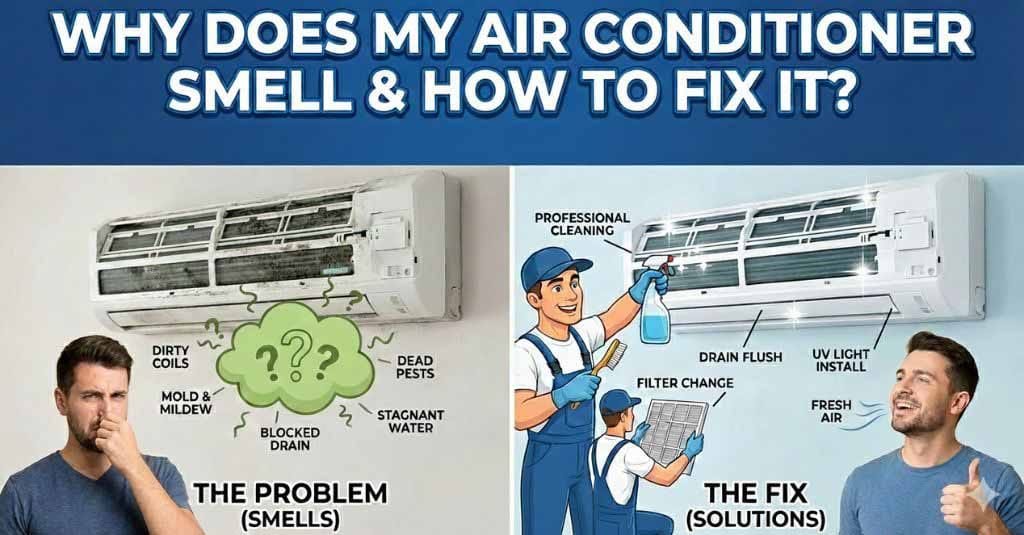
A sudden wave of an odd smell when you start your air conditioning can ruin a quiet evening. The first thing most homeowners do is to Google “why does my air conditioner smell” and brace for bad news. If you are one of those and have stumbled upon this article, here’s the good news – most odors fall into a few clear categories, and many have simple fixes you can do with a flashlight and basic cleaners.
This article covers each common AC smell, what it means, tools to keep on hand, safe steps you can try, and clear signs that it’s time to call Capitol Cooling—especially when dealing with issues like a musty smell from AC unit that could indicate mold, moisture buildup, or ventilation problems.
Gear to Keep Near the Air Handler
With these items, you can tackle most basic odor problems before the air ever stops cooling. Moreover, these things are commonly available in any household:
- Foil HVAC tape
- Clean 1-inch or 2-inch filters in the right size
- White vinegar and a small funnel
- Soft-bristle vacuum brush
- Soap-water spray bottle for leak checks
- Flashlight or headlamp
- A flat screwdriver to open service panels
Common Air Conditioner Smells and What They Mean
To make it more simpler for you to understand, we have dissected this section into four main parts in a table: Smell Type, Cause of It, First Step You Can Take at Home, and Risk Factors:
| Smell Type | Cause | DIY First Step | Risk |
| Musty or “Old Basement” | Mold may be growing on the evaporator coil. | First, you should change the filter. After, pour a half-cup of vinegar into the drain line. | It can cause allergies to act up and can make your clothes “musty.” |
| Rotten Eggs | Natural gas leaks near a furnace or nearby plumbing. | None. Leave the house and call the utility company. | Fire, explosion, carbon monoxide. |
| Sewage | The return air is sucking in sewer gas. Can be due to a dry or cracked P-trap in a floor drain. | Mix a drop of dish soap with two cups of water and throw it down the drain. | Germ exposure and eye irritation. |
| Electrical or Burning Dust | Dust on heat strips, loose wire, or worn motor bearings. | Ensure you switch off the unit first. Vacuum dust, and tighten any obvious wiring screws if you feel confident. Restore power and test. | Fire and costly parts failure. |
| Sharp Chemical | Refrigerant leak or overheated plastic wire insulation. | Spray a soapy water solution on copper joints; bubbles indicate a leak. Stop there and call a pro. | Lower cooling, higher bills, nausea. |
| Dead Animal | Rodent, lizard, or bird trapped in duct or condenser fan area. | Put on gloves, pick off the grille, bag and dispose of the animal carefully. Spray disinfectant after. | Bacteria and lingering odor. |
| Dirty-Filter or “Gym Bag” | Filter packed with dust, pet hair, and moisture. | Swap the filter, then run the fan for an hour. | Frozen coil and compressor strain. |
How to Diagnose at Home
To diagnose the core problem of HVAC system at home, here’s what you should do:
- Locate the strongest spot. Stand near supply vents, then the return.
- Match the odor to the list. Plain terms help you avoid guesswork.
- Inspect the filter first. This quick task fixes many complaints
- Peek inside the indoor unit. With power off, open the panel and look for water, rust, or burnt wires.
- Test floor drains. A cup of water takes seconds and often clears sewer smells.
- Note timing. A scent only at start-up points to dust; a constant one often means mold or a leak.
- Stop if the odor is severe. Rotten eggs, burning plastic, or dizziness call for professional help at once.
Safe DIY Fixes
When you have diagnosed the main problem causing all the conundrum, here are some quick DIY fixes so you don’t have to wait another day to get a professional’s appointment:
- Replace or wash the filter every 60-90 days, sooner with pets.
- Every month, flush the drain with half white vinegar and half warm water.
- Vacuum the surface of the coil. (You can do that by using a soft brush attachment.)
- Wipe supply vents with a damp cloth to remove trapped dust.
- Run the fan on “On” for 30 minutes after cleaning to dry the coil.
- Seal duct gaps with foil HVAC tape to keep attic or crawl-space air out.
- Keep drains wet by adding a cup of water monthly.
- Set a dehumidifier if indoor humidity climbs above 55 percent.
Safety tip: If you smell gas or burning plastic, shut off the breaker and get outside. Don’t make any calls inside.
Quick Weekly Checklist
For weekly inspections, please do:
- Walk past each supply vent and sniff for new odors.
- Check that the thermostat fan setting is on “Auto.”
- Glance at the outdoor unit for leaves or pest nests.
When to Call a Professional
Reach out to Capitol Cooling (we are the best in town!) if:
- The smell is rotten eggs, or you hear a gas alarm.
- DIY steps do not clear the odor within two days.
- You see burnt wiring, melted plastic, or smoke.
- Mold covers an area larger than a dinner plate.
- Refrigerant bubbles appear or cooling performance drops.
- A dead animal is stuck where you cannot reach it safely.
Final Thoughts
When your air conditioner smells foul, it is not necessarily the end of the world (It’s a cost-effective solution that won’t strain your budget). But the situation does need you to act quickly. With this information about the main causes of my air conditioner smell, you can identify issues in time, try non-hazardous solutions, and know when it is better to call in a professional.
An unmistakably clean, dry, and well-maintained air conditioning system flows fresh air, is cheaper to operate, and has a long life. In case of any professional assistance you require in central Texas, Capitol Cooling is just a call away to make you breathe easier. Our years of experience in the industry and professional expertise make us the best candidate (apparently even better than you) to help you in this tough situation.