
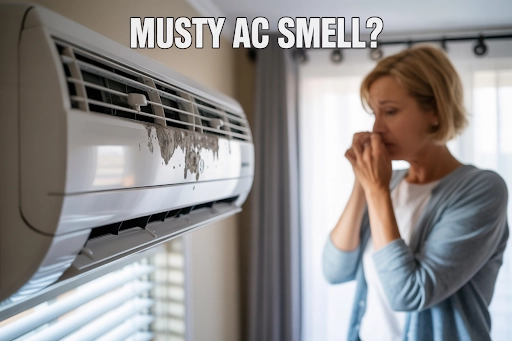
A musty smell from an AC unit is often the first sign of moisture problems inside your air conditioning unit. In most cases, the odor develops when moisture is accumulating on the evaporator coils, drain pan, or inside the ductwork. This smell is usually strongest when the system turns on after sitting idle, especially in humid weather.
While the odor may seem minor at first, it often signals airflow or moisture issues that can lower indoor air quality. Below, we explain the most common causes, health risks, easy fixes, and when to call a professional.
Why Your AC Smells Musty & How to Fix It?
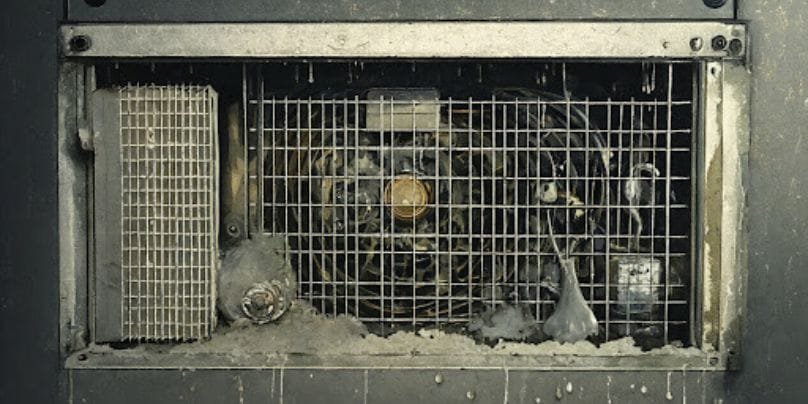
Moisture Inside Ducts and Vents
Air conditioners naturally create condensation. When water does not drain or dry properly, moisture stays trapped in ducts and vents. Over time, this damp environment allows bacteria and mold to grow, spreading a musty smell from the air conditioner throughout the home.
Dirty or Damp Air Filters
Air filters collect dust and debris. When filters become dirty or damp, they block airflow and trap moisture inside the air conditioning unit. This creates ideal conditions for mildew and odor buildup and can also cause coils to freeze and release more moisture as they thaw.
Mold Growth on Internal Components
Mold grows quickly when moisture and dust combine. Common problem areas include evaporator coils, blower fans, and duct joints. As mold spreads, it releases particles that cause a strong, persistent musty odor from AC components.
Standing Water in the Drain Pan
If the condensate drain line clogs, water backs up and sits in the drain pan. Standing water allows bacteria and mold to grow rapidly, causing unpleasant smells whenever the AC runs.
Is Musty AC Smell Dangerous?
Yes. A musty smell from an air conditioner often points to mold or mildew inside the system. These release spores into the air that can trigger allergies, worsen asthma, and irritate breathing—especially in children, older adults, and sensitive individuals. While not an emergency, it is a real health concern that should be addressed quickly.
Health Risks of Ignoring a Musty AC Smell
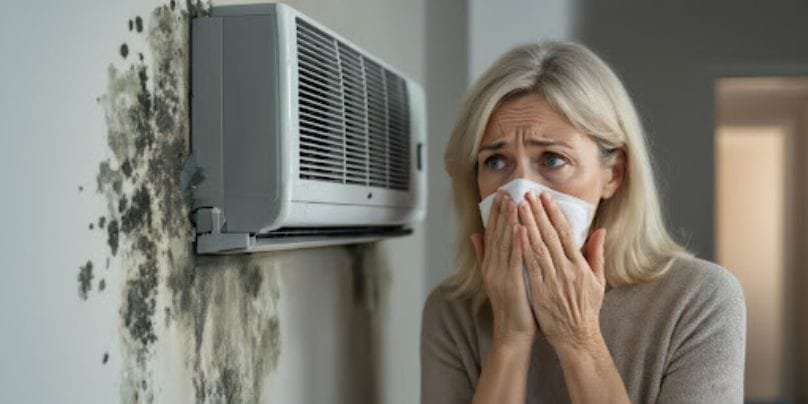
- Irritated airways, coughing, or congestion
- Allergy symptoms like sneezing, headaches, and watery eyes
- Worsened asthma or existing lung conditions
- Lower indoor air quality during long cooling cycles
How to Get Rid of a Musty Smell From an AC Unit
Replace the Air Filter
Check filters monthly and replace them every 1–3 months. If the filter smells damp or looks stained, dispose of it properly to avoid spreading spores.
Clean Vents and Registers
Wash vent covers with mild soap and water. Vacuum inside the duct opening and allow everything to dry fully before reinstalling.
Clear the Condensate Drain Line
Pour white vinegar into the drain line to break down algae and bacteria. Use a wet/dry vacuum on the outdoor drain outlet if needed.
Improve Airflow
Keep vents unblocked, use exhaust fans, and run ceiling fans to help moisture dry between cooling cycles.
When to Call a Professional HVAC Technician
Call a HVAC professional if:
- The musty smell lasts more than a few days
- The odor returns after filter changes
- Multiple rooms are affected
- You notice visible mold or high indoor humidity
A professional inspection can identify mold on coils, drainage issues, or airflow problems before they lead to bigger repairs.
How to Prevent Musty Smells Long-Term
- Replace air filters on schedule
- Keep indoor humidity between 30% and 50%
- Schedule annual HVAC maintenance to keep coils clean and drain lines clear
FAQs About Must Smell From AC Unit
Is musty ac smell dangerous?
Yes, a musty AC smell can be dangerous because it usually signals mold or mildew growth, releasing spores that trigger allergies, asthma attacks, and respiratory issues, especially for sensitive individuals; while not an immediate emergency like a gas leak, it’s a significant health risk requiring prompt attention to prevent worse indoor air quality and health problems.
Why does my AC smell musty when I turn it on?
A musty smell when the AC first turns on usually means moisture has built up on the evaporator coil or inside the system while it was off. When the AC starts, that trapped moisture releases a musty smell from vents. This is common in humid climates and systems that don’t dry out properly between cycles.
Does a musty smell from the AC mean mold?
Not always, but mold or mildew is one of the most common causes. A musty odor typically indicates moisture combined with organic growth somewhere in the AC system, such as the evaporator coil, drain pan, or ductwork. Even if mold isn’t visible, the smell is a sign that moisture is not draining correctly.
Can a musty AC smell be harmful to my health?
A musty AC smell can affect indoor air quality and may trigger allergies, headaches, or respiratory irritation, especially for children, elderly individuals, or people with asthma. If mold is present, prolonged exposure can worsen symptoms. If the smell persists, it’s best to have the system professionally inspected to avoid health risks.
Why does my AC smell worse on humid or rainy days?
High humidity increases moisture inside the AC system, making it harder for components to fully dry. On humid or rainy days, condensate lines may drain slowly, and moisture can linger on coils or in drain pans. This creates ideal conditions for musty odors to become stronger when the AC is running.
Is it safe to run my AC if it smells musty?
Running the AC briefly is usually not dangerous, but continuously operating a system with a musty smell can circulate poor-quality air throughout your home. If the odor persists or worsens, it may indicate mold or a drainage issue that should be addressed.
Will changing the air filter fix a musty AC smell?
Replacing a dirty or damp air filter can sometimes reduce mild musty odors, especially if airflow was restricted. However, if the smell returns quickly, the problem is likely deeper within the AC system, such as moisture buildup on the evaporator coil or a clogged drain line, which requires professional attention.
Why does only one room smell musty when the AC runs?
If only one room smells musty, the issue may be localized to that area’s ductwork, vent, or insulation. Moisture buildup, minor leaks, or poor airflow in a specific duct can cause odors to concentrate in one room while the rest of the house smells normal.
Can I clean mold from my AC myself?
You can safely replace air filters and keep vents clean, but cleaning mold inside an AC system is not recommended without proper training. Mold inside coils or drain lines requires specialized equipment and cleaning methods. Attempting DIY cleaning can spread spores or damage the system.
How long does it take to fix a musty AC smell?
The time required depends on the cause. Simple issues like filter replacement may take minutes, while cleaning drain lines or coils typically takes one to two hours. More severe mold or moisture problems may require a more thorough inspection.
When should I call an HVAC professional for a musty AC smell?
You should call an HVAC professional if the musty smell lasts more than a few days, keeps returning after filter changes, spreads through multiple rooms, or is accompanied by visible mold or high indoor humidity. Professional inspection helps identify moisture, drainage, or airflow issues before they cause bigger problems.
Conclusion
A musty smell from AC unit issues is a clear warning sign of moisture or airflow problems inside your air conditioning unit. While simple steps can fix minor issues, ongoing odors should never be ignored.
Routine maintenance and timely professional service protect your indoor air quality, your system’s performance, and your family’s health.
Choose Capitol Cooling for reliable HVAC maintenance you can trust. Schedule your service today and enjoy fresher air tomorrow.