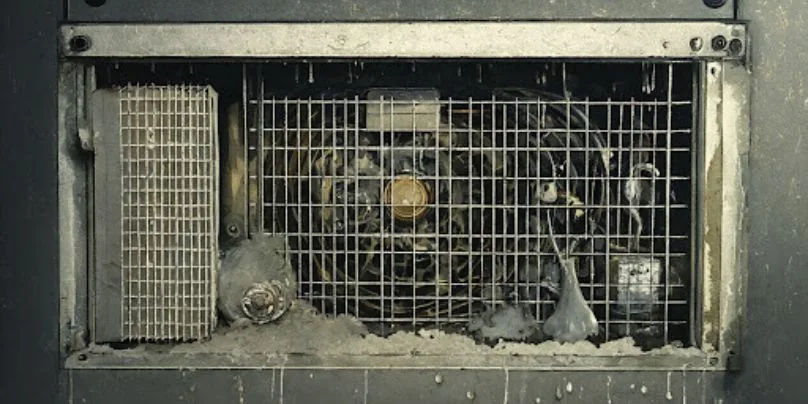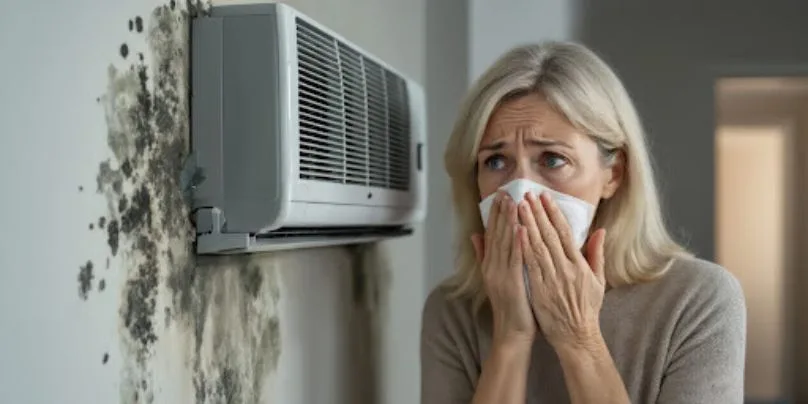
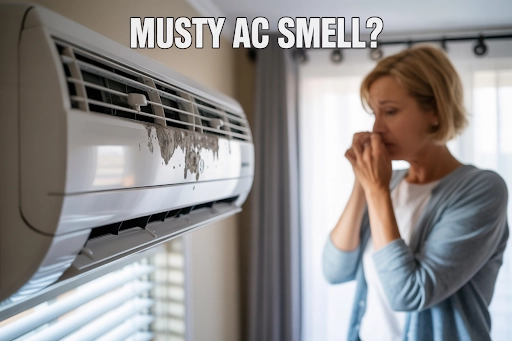
A musty smell from an AC unit usually means moisture buildup inside the system, allowing mold, mildew, or bacteria to grow on coils, drain pans, or ductwork. If the odor is strongest when the AC first turns on, the problem is often microbial growth inside the unit. This guide explains the causes, health risks, and how to fix it safely. You’ll discover the most common causes behind these unpleasant smells, from dirty filters to hidden mold growth that’s lurking in your ductwork.
We’ll also cover the serious health risks that come with ignoring these odors – because what starts as a minor annoyance can quickly become a bigger problem for you and your family’s wellbeing. Finally, you’ll learn practical DIY solutions you can try today, plus when it’s time to call in the professionals to get your AC running fresh and clean again.
Musty Smell From AC Unit: Common Causes

Moisture Buildup in Air Ducts and Vents
When your AC system runs, it naturally creates condensation as warm air passes over cold evaporator coils. This moisture can accumulate in your ductwork, especially in areas with poor ventilation or inadequate insulation. You might notice this problem more during humid summer months when your system works harder to cool your home.
Your air ducts can trap this moisture, creating the perfect breeding ground for bacterial growth. Leaky ducts make the problem worse by allowing humid outside air to enter the system. If your ducts run through unconditioned spaces like basements, crawl spaces, or attics, temperature differences can cause even more condensation to form along the duct walls.
Dirty or Clogged Air Filters Trapping Contaminants
Your air filter serves as the first line of defense against dust, pollen, pet dander, and other airborne particles. When you don’t change your filter regularly, it becomes saturated with contaminants and loses its effectiveness. A clogged filter can’t properly clean the air flowing through your system, allowing particles to settle throughout your ductwork.
These trapped particles hold onto moisture and create an environment where bacteria and microorganisms can thrive. You’ll start noticing that musty smell from AC unit becoming stronger as more contaminants build up. The restricted airflow from a dirty filter also reduces your system’s efficiency and can cause ice buildup on the evaporator coils, leading to additional moisture problems.
Mold and Mildew Growth in the System
Mold spores are everywhere in your home’s environment, and they’re just waiting for the right conditions to multiply. Your HVAC system provides two key ingredients mold needs: moisture and organic material to feed on. Dust, pollen, and other debris that accumulate in your system become food sources for mold colonies.
You’ll typically find mold growth in several areas of your AC system:
- Around the evaporator coils where condensation forms
- In air ducts, particularly at joints and bends
- On the blower fan and housing
- In areas where airflow is restricted
Once mold establishes itself in your system, it releases spores and volatile organic compounds that create that distinctive musty odor. The problem gets worse over time as mold colonies spread throughout your ductwork.
Stagnant Water in Drain Pans
Your AC unit has a condensate drain pan that collects water from the evaporator coils. This water should flow out through a drain line to prevent overflow. However, when the drain line becomes clogged with algae, dirt, or debris, water starts backing up in the pan.
Standing water in your drain pan becomes a breeding ground for bacteria, algae, and other microorganisms. You might see slimy buildup or even small insects around the drain area. The stagnant water produces unpleasant odors that get distributed throughout your home every time your system runs. Regular HVAC maintenance of your drain system prevents this common cause of musty AC smells.
Serious Health Risks of Ignoring Musty AC Smells

Respiratory Problems and Breathing Difficulties
When you ignore that musty smell from your AC unit, you’re essentially breathing in contaminated air every day. The mold, bacteria, and other microorganisms causing the odor release spores and toxins that directly attack your respiratory system. Your lungs work overtime trying to filter out these harmful particles, leading to persistent coughing, throat irritation, and shortness of breath.
You might notice your breathing becomes labored, especially at night when you’re sleeping with the AC running. The contaminated air circulates throughout your bedroom, and you end up inhaling these pollutants for hours. This prolonged exposure can cause inflammation in your airways, making it harder for oxygen to reach your bloodstream efficiently.
Allergic Reactions and Skin Irritation
Your immune system treats the contaminants from your musty AC as foreign invaders, triggering allergic responses that can make your daily life miserable. You’ll likely experience frequent sneezing fits, runny nose, and watery eyes that seem to appear mysteriously when you’re indoors.
The allergens circulating through your home’s air system don’t just affect your respiratory tract – they settle on your skin and furniture too. You might develop unexplained rashes, eczema flare-ups, or general skin irritation that feels itchy and uncomfortable. Your skin becomes a battlefield as these airborne particles make contact and trigger inflammatory responses.
Contact dermatitis is particularly common when mold spores land on sensitive skin areas. You could wake up with red, inflamed patches on your arms, face, or neck without understanding why. The constant exposure keeps your immune system in overdrive, making you more sensitive to other allergens in your environment.
Aggravated Asthma and Other Lung Conditions
If you already have asthma or other respiratory conditions, that musty smell from your AC unit becomes a serious threat to your health. The contaminated air acts as a constant trigger, making your existing symptoms much worse and more frequent.
Your asthma attacks might become more severe and harder to control with your usual medications. The inflammation in your airways increases dramatically when exposed to mold spores and bacterial toxins, causing your bronchial tubes to narrow and produce excess mucus. You’ll find yourself reaching for your inhaler more often and struggling to get relief.
Quick DIY Solutions to Eliminate Musty Odors

Replace Air Filters with High-Quality Options
Your AC’s air filter is often the first line of defense against that persistent musty smell from AC unit issues. When filters become clogged with dust, moisture, and debris, they create the perfect breeding ground for mold and bacteria. You’ll want to check your filter monthly and replace it every 1-3 months, depending on usage and environmental conditions.
Choose HEPA or high-MERV rated filters (MERV 8-13) for superior odor control. These filters capture smaller particles and microorganisms that standard filters miss. While they cost more upfront, they’ll save you from bigger problems down the road. If you have pets or live in a dusty area, consider upgrading to antimicrobial filters that actively fight mold and bacteria growth.
When replacing your filter, take note of any visible mold or unusual discoloration. This gives you valuable insight into what’s happening inside your system. Always turn off your AC before removing the old filter, and dispose of moldy filters in sealed bags to prevent spores from spreading throughout your home.
Clean and Disinfect Air Vents Thoroughly
Your air vents and registers accumulate dust, moisture, and organic matter that feed mold growth. Start by removing all vent covers and washing them with warm, soapy water. For stubborn buildup, use a mixture of water and white vinegar to break down mineral deposits and kill mold spores.
While the covers dry, use a vacuum with a brush attachment to clean inside the ductwork as far as you can reach. Follow up with a damp microfiber cloth to wipe away remaining residue. Don’t forget about return air vents, which often harbor more debris since they pull air back into the system.
For disinfection, spray the cleaned vents with a solution of one part bleach to ten parts water, or use a commercial antimicrobial spray. Allow the solution to sit for 10 minutes before wiping clean. Make sure everything is completely dry before reinstalling, as any remaining moisture will only invite more mold growth.
Clear Clogged Condensate Drain Lines
Blocked condensate drains are major culprits behind musty AC odors. Your AC produces moisture as it cools air, and this water needs somewhere to go. When drain lines clog with algae, mold, or debris, water backs up and creates a stagnant breeding ground for microorganisms.
Locate your condensate drain line – usually a white PVC pipe near your outdoor unit. Pour a cup of white vinegar down the drain to dissolve buildup and kill mold. You can also use a wet/dry vacuum to suction out stubborn clogs from the outdoor end of the pipe. For preventive maintenance, drop a condensate drain tablet into your drain pan monthly.
Check your indoor drain pan for standing water or visible growth. If you find water pooling, clean the pan with bleach solution and ensure proper drainage. Some units have multiple drain lines, so check all connections and outlets. A properly functioning drainage system should have water flowing freely during operation.
Apply Anti-Microbial Treatments to Problem Areas
Target specific areas where mold and bacteria thrive with specialized treatments. Focus on the evaporator coils, drain pan, and any areas where you’ve noticed visible growth or strong odors. Commercial HVAC antimicrobial sprays are designed specifically for air conditioning systems and won’t damage sensitive components.
Before applying any treatment, turn off your system and remove debris from the target area. Spray the antimicrobial solution according to manufacturer instructions, paying special attention to hard-to-reach areas where moisture tends to collect. Many products require a contact time of 10-15 minutes to be effective.
For natural alternatives, use a solution of tea tree oil and water (10 drops per cup) or hydrogen peroxide spray. These options are gentler on your system while still providing antimicrobial benefits. Remember that treatment is most effective when combined with proper cleaning and moisture control.
Improve Ventilation and Air Circulation
Poor airflow creates pockets of stagnant, humid air that encourage mold growth throughout your HVAC system. Start by ensuring all vents remain unobstructed by furniture, curtains, or other items. Even partial blockages can significantly impact air circulation patterns.
Consider adding exhaust fans in high-humidity areas like bathrooms and kitchens to reduce the moisture load on your AC system. These fans help remove humid air before it circulates through your ductwork. Running bathroom fans during and after showers prevents excess moisture from entering your HVAC system.
You might also benefit from installing additional return air vents if your home feels stuffy or certain rooms remain humid despite AC operation. Ceiling fans can supplement your AC by improving air movement, helping prevent moisture from settling in corners and crevices where mold loves to grow. Proper ventilation not only eliminates existing odors but prevents new ones from developing.
Professional AC Maintenance and Repair Options

Deep Duct Cleaning Services
When your DIY efforts can’t tackle that persistent musty smell from AC unit, professional duct cleaning becomes your best option. Certified technicians use specialized equipment like high-powered vacuums and rotating brushes to remove debris, mold, and contaminants that you simply can’t reach on your own.
Professional duct cleaning services typically involve:
- Complete system inspection using cameras to identify problem areas
- Negative pressure cleaning that prevents contaminated air from escaping into your home
- Antimicrobial treatments applied to surfaces to prevent future microbial growth
- Filter replacement with high-efficiency options
You can expect the process to take 3-6 hours depending on your system size. Most reputable companies will show you before-and-after photos of your ductwork, so you can see exactly what they’ve removed. Costs vary depending on system size and contamination level, but consider this: clean ducts can improve your system’s efficiency by up to 40%.
HVAC System Inspection and Tune-Up
Your AC system needs regular professional attention, just like your car needs tune-ups. During a comprehensive inspection, trained technicians examine every component that could contribute to musty odors and poor air quality.
A thorough HVAC inspection includes:
- Evaporator coil cleaning to remove mold and bacteria buildup
- Condensate drain clearing to prevent water backup and stagnation
- Refrigerant level checks to ensure proper humidity control
- Airflow measurement to identify circulation problems
- Electrical connection tightening for optimal system performance
Professional tune-ups address root causes of moisture problems that create ideal conditions for musty odors. Technicians calibrate your thermostat, check ductwork seals, and replace worn components before they fail completely.
Mold Remediation and Prevention Services
Sometimes musty AC odors signal serious mold contamination that requires professional remediation. Certified mold specialists have the training, equipment, and experience to safely remove mold colonies and prevent their return.
Professional mold remediation involves:
| Service Component | What’s Included |
|---|---|
| Assessment | Air quality testing, moisture mapping, contamination scope |
| Containment | Sealed work areas, negative air pressure systems |
| Removal | Safe extraction of contaminated materials |
| Treatment | Antimicrobial applications, surface disinfection |
| Prevention | Moisture control recommendations, ongoing monitoring |
Mold professionals use industrial-grade HEPA filtration systems and antimicrobial treatments that aren’t available to consumers. They’ll also identify moisture sources you might miss, like hidden leaks or inadequate ventilation.
Expect remediation costs to range from $500-$6,000 depending on contamination extent. While this seems expensive, professional mold removal protects your family’s health and prevents structural damage to your home. Many companies offer warranties on their work and will retest air quality to verify successful treatment.
Remember that effective mold prevention requires ongoing moisture control. Professionals can recommend dehumidification systems, improved ventilation, and maintenance schedules tailored to your specific situation.
Prevention Strategies to Keep Your AC Fresh

Regular Filter Replacement Schedule
Your air filter acts as your AC’s first line of defense against dust, debris, and moisture that can create that unpleasant musty smell from AC unit issues. You need to replace standard filters every 1-3 months, depending on your usage and home environment. If you have pets, live in a dusty area, or run your AC frequently, monthly replacements work best.
Mark your calendar or set phone reminders to check your filter on the first of each month. When you pull it out, hold it up to the light – if you can’t see through it clearly, it’s time for a new one. Don’t wait until it’s completely clogged, as this forces your system to work harder and creates perfect conditions for mold and mildew growth.
Consider upgrading to higher-quality filters with better MERV ratings (8-12 for most homes). These capture smaller particles and help maintain cleaner air circulation. Keep spare filters on hand so you’re never caught without one when replacement time comes around.
Maintain Proper Humidity Levels Indoors
Your indoor humidity levels directly impact whether your AC develops musty odors. You want to keep humidity between 30-50% year-round. When levels climb above 60%, you’re creating a breeding ground for mold and mildew in your ductwork and around your unit.
Use a digital hygrometer to monitor humidity throughout your home. Place them in different rooms to get accurate readings, especially in areas where you’ve noticed musty smells.
If humidity runs high, run exhaust fans in bathrooms and kitchens longer after showers and cooking. Fix any water leaks promptly, and consider using a whole-house dehumidifier if you consistently struggle with moisture issues. During winter months when humidity drops too low, a humidifier prevents your system from overworking.
Your AC naturally removes some humidity, but it can’t handle excessive moisture alone. Good ventilation and moisture control work together to prevent the conditions that lead to musty smells.
Schedule Annual Professional Maintenance
Professional maintenance goes far beyond what you can handle yourself. Your HVAC technician will deep-clean components you can’t safely access, inspect parts for early wear, and catch problems before they turn into expensive repairs or health hazards.
During your annual service, technicians clean your evaporator coils, check refrigerant levels, inspect ductwork for leaks or mold growth, and ensure proper drainage. They’ll also test your system’s efficiency and airflow to make sure everything runs smoothly.
Schedule your maintenance visit before peak cooling season – ideally in late spring. This timing ensures your system runs at peak performance when you need it most. Don’t skip this service even if your AC seems to work fine. Many problems develop gradually, and early detection saves you money and prevents those musty odors from developing in the first place.
Ask your technician about any concerns you have with air quality or unusual smells. They can recommend specific solutions based on your home’s unique needs and your system’s condition.
FAQs About Must Smell From AC Unit
Why does my AC smell musty when I turn it on?
A musty smell when the AC first turns on usually means moisture has built up on the evaporator coil or inside the system while it was off. When the AC starts, that trapped moisture releases a damp odor through the vents. This is common in humid climates and systems that don’t dry out properly between cycles.
Does a musty smell from the AC mean mold?
Not always, but mold or mildew is one of the most common causes. A musty odor typically indicates moisture combined with organic growth somewhere in the AC system, such as the evaporator coil, drain pan, or ductwork. Even if mold isn’t visible, the smell is a sign that moisture is not draining correctly.
Can a musty AC smell be harmful to my health?
A musty AC smell can affect indoor air quality and may trigger allergies, headaches, or respiratory irritation, especially for children, elderly individuals, or people with asthma. If mold is present, prolonged exposure can worsen symptoms. If the smell persists, it’s best to have the system professionally inspected to avoid health risks.
Why does my AC smell worse on humid or rainy days?
High humidity increases moisture inside the AC system, making it harder for components to fully dry. On humid or rainy days, condensate lines may drain slowly, and moisture can linger on coils or in drain pans. This creates ideal conditions for musty odors to become stronger when the AC is running.
Is it safe to run my AC if it smells musty?
Running the AC briefly is usually not dangerous, but continuously operating a system with a musty smell can circulate poor-quality air throughout your home. If the odor persists or worsens, it may indicate mold or a drainage issue that should be addressed. Ignoring it can lead to health concerns and reduced system efficiency.
Will changing the air filter fix a musty AC smell?
Replacing a dirty or damp air filter can sometimes reduce mild musty odors, especially if airflow was restricted. However, if the smell returns quickly, the problem is likely deeper within the AC system, such as moisture buildup on the evaporator coil or a clogged drain line, which requires professional attention.
Why does only one room smell musty when the AC runs?
If only one room smells musty, the issue may be localized to that area’s ductwork, vent, or insulation. Moisture buildup, minor leaks, or poor airflow in a specific duct can cause odors to concentrate in one room while the rest of the house smells normal.
Can I clean mold from my AC myself?
You can safely replace air filters and keep vents clean, but cleaning mold inside an AC system is not recommended without proper training. Mold inside coils or drain lines requires specialized equipment and cleaning methods. Attempting DIY cleaning can spread spores or damage the system, making professional service the safer option.
How long does it take to fix a musty AC smell?
The time required depends on the cause. Simple issues like filter replacement may take minutes, while cleaning drain lines or coils typically takes one to two hours. More severe mold or moisture problems may require a more thorough inspection. A professional diagnosis ensures the issue is fully resolved, not temporarily masked.
When should I call an HVAC professional for a musty AC smell?
You should call an HVAC professional if the musty smell lasts more than a few days, keeps returning after filter changes, spreads through multiple rooms, or is accompanied by visible mold or high indoor humidity. Professional inspection helps identify moisture, drainage, or airflow issues before they cause bigger problems.
Conclusion
That musty smell coming from your AC isn’t just annoying—it’s a warning sign you shouldn’t ignore. From dirty air filters and clogged drain pans to mold growth and moisture buildup, these odors can seriously impact your indoor air quality and your family’s health. Breathing in contaminated air can trigger allergies, worsen asthma, and even lead to respiratory infections, especially for kids and elderly family members.
The good news is you can tackle many of these issues yourself with simple fixes like replacing filters, cleaning drain pans, and checking for obvious blockages. When DIY solutions aren’t enough, calling in a professional for deep cleaning, duct inspection, or repairs will get your system back on track. Remember to stay ahead of problems by scheduling regular maintenance, keeping your home’s humidity in check, and changing those filters on time. Your lungs—and your wallet—will thank you for catching these issues early rather than waiting for bigger, costlier problems down the road.